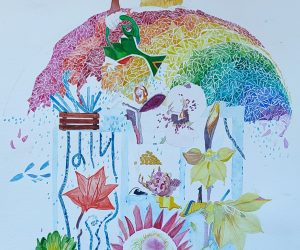
Unique illustrations of endangered wildlife

Since the 1970s, there has been a 68% reduction in species of mammals, birds, reptiles, fish and amphibians, i.e., in the last half century we have lost more than two-thirds of all animal diversity that took tens if not hundreds of thousands of years to evolve.

«NGOZINI» means «in danger» in isiXhosa, isiZulu, and siSwati, three of the official languages of South Africa.

We want to help reverse this trend through creating signature illustrations of endangered wildlife.

With our ecological paper PRINTS and fair trade T-SHIRTS made with organic cotton, we want to support the work of the people who work directly in the protection of these 36 ecosystems.

endangered animals & plants

Not only Plants & Animals

In each design, in addition to showing endangered species that are also representative of each hot spot, we want to show aspects of the culture and people of those places.
biodiversity
LINCE FINAL

Mediterranean Basin

This hotspot covers the entire Mediterranean Coast, spanning over 20 countries and some achipielago such as the Canary Islands in Spain. The protagonist of this hotspot in our illustrations is the Iberian Lynx, endemic to Spain and Portugal.
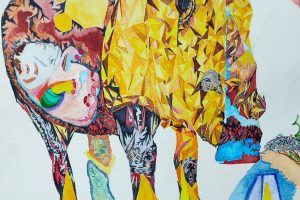
Rinoceronte negro, Mozambique, Eswatini y Sudáfrica

Maputaland, Pondoland, Albany

This hotspot is found in the countries of South Africa, Mozambique, and Eswatini (formerly known as Swaziland). Its protagonist is the black rhino, of which fewer than 5,000 remain in the world.
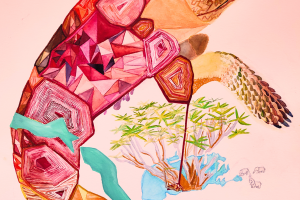
tortuga CANVA

Succulent Karoo

Found entirely in South Africa and Namibia, the Succulent Karoo is one of two arid hotspots in the world.

ingozini