What are the
Biodiversity Hotspots?
36 areas of the world holding extraordinary concentrations of endemic species — and facing extraordinary threats. We illustrate them so the world knows they exist.
on Earth
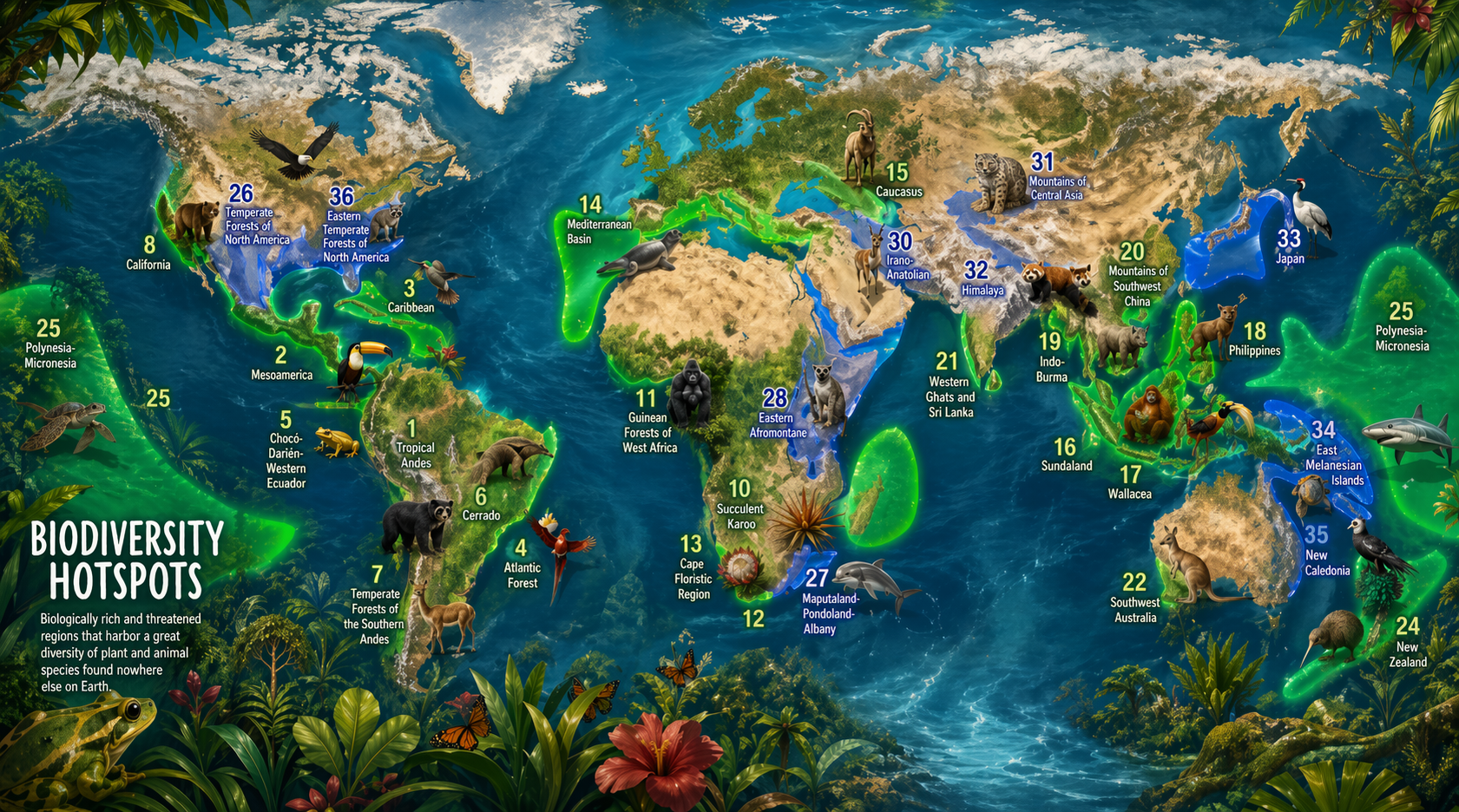
An area qualifies as a Biodiversity Hotspot
when it meets two strict criteria
More than 70% of the original forest has been degraded or lost.
It contains at least 1,500 species of vascular (higher) plants.
In our first collection of Ingozini Illustrations, we have illustrated species from 8 of these hotspots.
Read about each one

Spanning 20+ countries across the Mediterranean coast. After teetering on the edge of extinction with only 94 individuals, the Iberian Lynx is now classified as Vulnerable as of June 2024.

One of only two arid hotspots in the world, found entirely in South Africa and Namibia. The Nama Dwarf Tortoise, its protagonist, is labelled as Vulnerable by the IUCN.
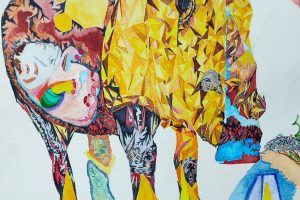
Fewer than 5,000 black rhinos remain in the world. Classified as Critically Endangered by the IUCN, this hotspot spans South Africa, Mozambique and Eswatini.
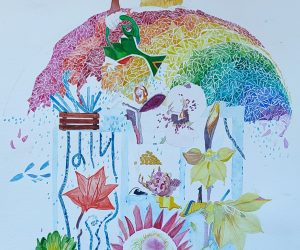
Located in the Northern, Eastern and Western Cape provinces — where Cape Town lies. The King Protea, South Africa’s national flower, is the protagonist of this extraordinary botanical hotspot.

The most diverse hotspot on Earth and the first ever catalogued. Its protagonist is endemic to a tiny area of Colombia — Critically Endangered, and considered by some to be already extinct.

Found in south-central Chile and the western Patagonian Andes. The Chilean Chinchilla, classified as Endangered by the IUCN, represents this ancient and threatened forest ecosystem.

Earth is the only known planet with vast liquid water on its surface. The Blue Whale is Endangered; the Mexican Vaquita has only 10 individuals left in the world.

Entirely in California. The California Redwood is the tallest tree on Earth; the Giant Sequoia the most massive. Both classified as Endangered by the IUCN.
We illustrate the species.
You tell the story.
Explore our first collection — each illustration a carefully crafted portrait of the species that represent these extraordinary places on Earth.